
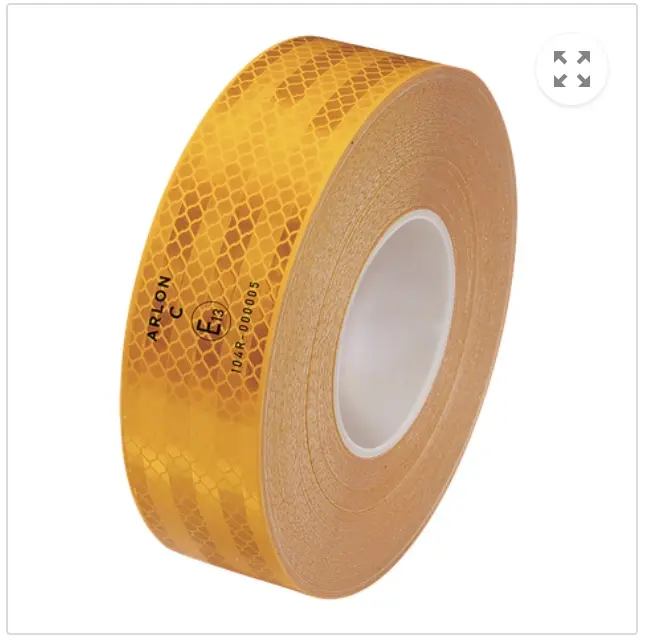
Honeycomb reflective tape, technically known as High-Intensity Prismatic (HIP) tape, is a safety material designed to retroreflect light back to its source. The distinctive hexagonal “honeycomb” pattern is more than an aesthetic choice; it represents a sophisticated optical structure that significantly outperforms standard glass-bead reflective tapes.
The Science of Visibility
The “honeycomb” cells contain micro-prisms. When light (such as a car’s headlights) hits these prisms, it is reflected at a much wider angle and with greater intensity than traditional materials. This is crucial for low-light and inclement weather conditions, where early detection of an object can prevent accidents.
Key Features
- High Retroreflectivity: The prismatic design returns up to 80% of light back to the source, making it visible from much greater distances.
- Durability: Most honeycomb tapes are constructed from weather-resistant polymers (like PET or PVC) that resist UV fading, water, and industrial solvents.
- Wide-Angle Performance: It remains highly reflective even when the light source hits it at a sharp angle, rather than just head-on.
- Impact Resistance: The hexagonal grid acts as a structural reinforcement, preventing the tape from tearing easily if it is scuffed or bumped.
Comparison: Honeycomb vs. Standard Reflective Tape
| Feature | Standard (Glass Bead) | Honeycomb (Prismatic) |
| Brightness | Moderate | High/Extreme |
| Visibility Distance | ~300–500 feet | ~1,000+ feet |
| Common Use | Decals, clothing trim | Traffic signs, heavy trucks, bollards |
| Lifespan | 3–5 years | 7–10 years |