
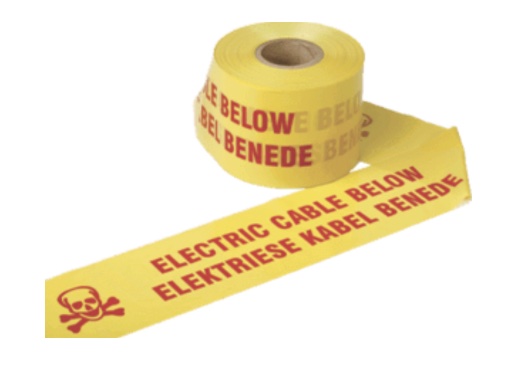
Product Overview: Underground Warning Tape
Underground cable warning tape is a critical safety component used in excavation and construction projects. It acts as a visual early warning system, buried at a specific depth above underground utility lines (such as electrical cables, fibre optics, or water pipes) to prevent accidental damage during digging.
Key Features
- High Visibility: Typically manufactured in vibrant colours—yellow for electric, red for power/gas, or orange for telecommunications—to ensure immediate recognition.
- Durable Material: Made from heavy-duty, acid-resistant polyethylene or polypropylene to withstand harsh soil conditions and chemical degradation over decades.
- Clear Messaging: Features bold, repeated warning text such as CAUTION: BURIED ELECTRIC LINE BELOW or ATTENTION: FIBRE OPTIC CABLE
- Detectable Options: Some versions include a metallic foil backing, allowing the tape to be located from the surface using a non-invasive pipe or cable locator.
Why Quality Matters
Using high-quality warning tape is not just about compliance; it’s about infrastructure integrity. Inferior tapes can fade or disintegrate, leading to blind strikes that result in costly repairs, service outages, or serious injury.
A roll of bright yellow heavy-duty plastic warning tape with bold black text reading CAUTION: BURIED ELECTRIC LINE BELOW. The tape is unrolled slightly to show the repeated warning message
Close-up of a yellow underground warning tape partially buried in a trench, positioned a few inches above a black electrical conduit to alert excavators of the utility line’s presence
Option 3: Technical (Best for detectable tape)
Silver-backed detectable warning tape in bright orange, featuring the text ATTENTION: BURIED TELECOMMUNICATION LINE. The metallic strip allows for surface detection using electronic equipment