
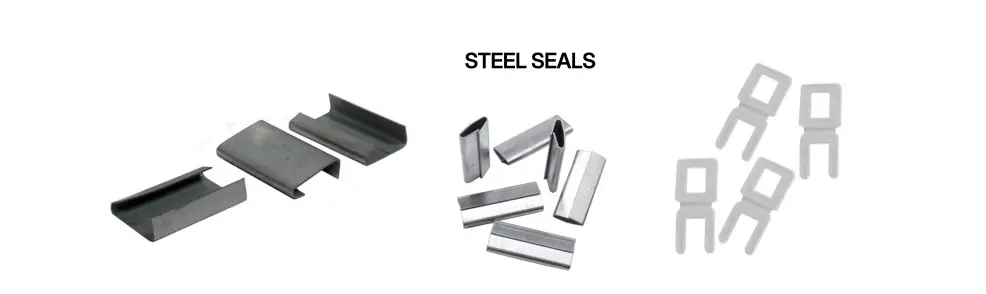
In the world of shipping and industrial packaging, the strap gets all the credit, but the strapping seal does all the heavy lifting. Without a high-quality seal, even the strongest steel or plastic banding is just an expensive loose ribbon.
Think of the seal as the “knot” that keeps the tension alive. It ensures that pallets remain stable, crates stay closed, and heavy machinery doesn’t budge during a cross-country haul.
Common Types of Strapping Seals
Choosing the right seal depends entirely on your strapping material and the tool you’re using.
| Seal Type | Best For | Description |
| Open Seals (Snap-On) | Polypropylene (PP) / Steel | The most common type. They slide over the strap after tensioning and are crimped shut. |
| Closed Seals (Push-Type) | Steel | Used for irregular shapes. The strap is threaded through the seal before tensioning. |
| Serrated Seals | Polyester (PET) | Feature “teeth” on the inside to grip smooth plastic strapping, preventing slippage under high tension. |
| Overlap Seals | Heavy-duty Steel | Designed so one end of the strap sits directly over the other; used primarily with sealer tools for maximum security. |
Why Quality Matters
A failed seal is more than just a nuisance; it’s a safety hazard. High-quality seals provide:
Application Speed: Precise manufacturing ensures they don’t jam in manual or battery-powered tools.
Joint Efficiency: Maintains the “break strength” of the strap.
Corrosion Resistance: Galvanized coatings prevent rust from weakening the bond during outdoor storage.