
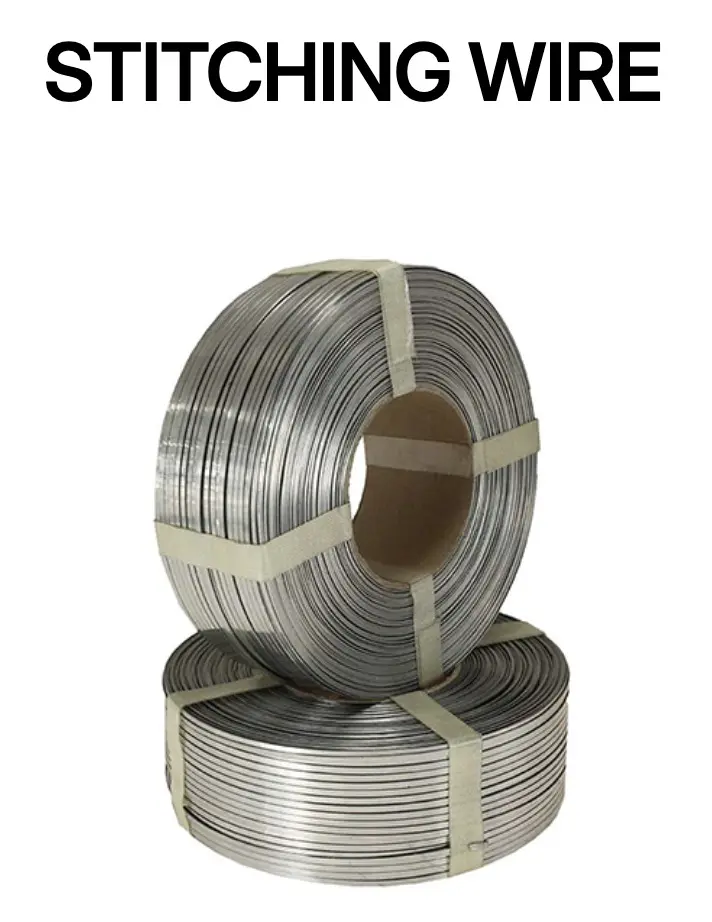
Stitching wire is a specialized, industrial-grade wire used primarily in the bindery and packaging industries. It functions as a continuous “staple” that is fed from a spool into a stitching machine, which then cuts, forms, and drives the wire through paper or cardboard to secure it.
Unlike pre-formed staples, stitching wire allows for high-speed, high-volume production with minimal downtime for reloading.
Key Characteristics
- Material: Usually made from high-quality low-carbon steel.
- Finishes: Most wire is coated to prevent corrosion and reduce friction. Common finishes include Galvanized (zinc-coated), Tin, or Copper.
- Shapes: * Round Wire: The standard choice for most commercial printing and booklets.
- Flat Wire: Used for heavy-duty applications like thick pads or corrugated boxes where extra surface area is needed for grip.
Common Applications
- Saddle Stitching: Binding magazines, catalogs, and brochures through the “spine” fold.
- Side Stitching: Securing stacks of paper by driving the wire through the front of the document.
- Corrugated Packaging: Closing heavy-duty boxes where glue or tape might fail.
- Header Cards: Attaching products to cardboard displays in retail environments.
Technical Specifications
Choosing the right wire depends on the thickness of the material being bound. This is typically measured by Gauge.
| Gauge | Common Use Case |
| 24 – 25 Gauge | Heavy-duty catalogs and thick booklets. |
| 26 – 28 Gauge | Standard magazines and brochures. |
| 30+ Gauge | Very thin, delicate paper applications. |