
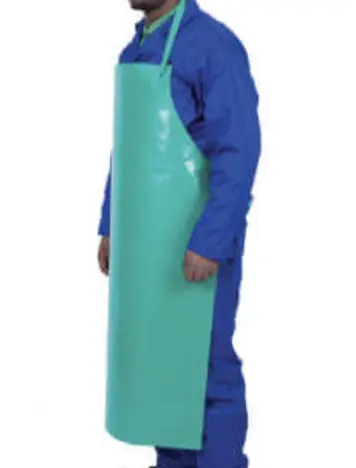
Whether you’re in a high-stakes industrial lab or handling heavy-duty cleaning agents, a chemical apron is your primary line of defense against splashes, spills, and hazardous substances. Unlike a standard kitchen or shop apron, these are engineered from specialized polymers designed to resist permeation and degradation.
Key Features & Materials
Chemical aprons aren’t “one size fits all” when it comes to protection. The material determines which chemicals you can safely handle:
- PVC (Polyvinyl Chloride): The “all-rounder.” Great for acids, oils, and greases. It’s durable and usually the most cost-effective.+2
- Neoprene: Offers superior flexibility and resists a wide range of chemicals, including many acids and alkalis.
- Nitrile: Best for petroleum-based products and puncture resistance.
- Rubber (Natural): Highly flexible and good for mild chemicals, though it can be sensitive to certain oils.
Design Elements
- Heat-Sealed Seams: Prevents liquid from seeping through stitch holes.
- Reinforced Grommets: Ensures the ties don’t rip out during heavy movement.
- Adjustable Straps: Crucial for ergonomics, preventing neck strain during long shifts.