
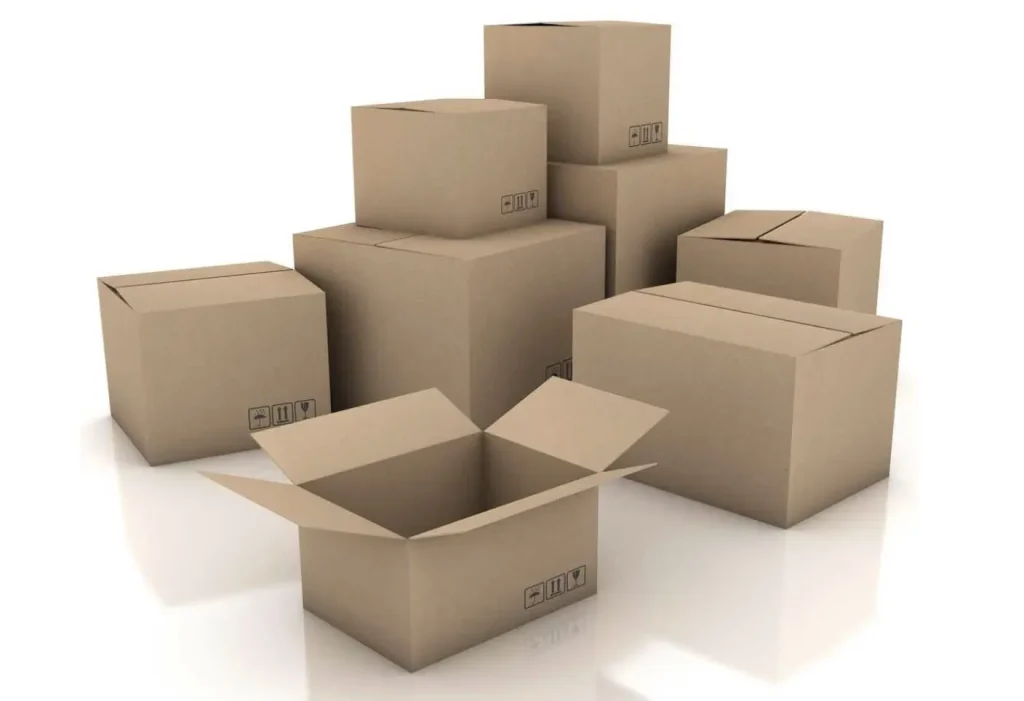
When it comes to shipping and storage, the “ply” (or wall thickness) of a cardboard box determines its strength, cushioning, and stackability. Understanding the difference is the key to ensuring your items arrive in one piece rather than a heap of recycled paper.
Here is a breakdown of single, double, and triple-wall corrugated fiberboard.
1. Single-Wall (Single-Ply)
Despite being called “single-ply” in common parlance, these are technically made of three layers: a corrugated medium (the wavy part) sandwiched between two flat linerboards.
- Best For: Lightweight items, e.g., books, clothing, or small electronics.
- Weight Capacity: Generally up to 10–15 kg.
- Pros: Cost-effective, lightweight, and easy to fold.
- Cons: Low puncture resistance; not ideal for heavy stacking.
Alt Text: A cross-section diagram of single-wall corrugated cardboard consisting of one internal fluted (wavy) layer glued between two flat outer liner sheets.
2. Double-Wall (Double-Ply)
Double-wall boxes consist of five layers: two corrugated mediums separated by a center liner, with two outer liners. This provides a significant jump in structural integrity.
- Best For: Heavy household appliances, fragile glassware, or long-term storage.
- Weight Capacity: Generally up to 30–45 kg.
- Pros: Excellent stacking strength; provides a “buffer zone” against side impacts.
- Cons: Heavier and bulkier to store when flat.
Alt Text: A cross-section diagram of double-wall corrugated cardboard featuring two layers of fluted medium and three flat linerboard layers, creating a thicker and more rigid structure.
3. Triple-Wall (3-Ply)
The “heavyweight champion” of the packaging world. These consist of seven layers: three corrugated mediums and four flat liners. These are often used as a substitute for wooden crates.
- Best For: Industrial machinery, automotive parts, or international shipping of extremely heavy bulk goods.
- Weight Capacity: Can often exceed 100+ kg depending on the flute size.
- Pros: Incredible compression strength; highly resistant to punctures and harsh shipping conditions.
- Cons: Very expensive; difficult to bend and tape without industrial equipment.
Alt Text: A cross-section diagram of triple-wall corrugated cardboard showing a thick seven-layer construction with three distinct fluted layers for maximum industrial strength.
Summary Comparison Table
| Feature | Single-Wall | Double-Wall | Triple-Wall |
| Durability | Moderate | High | Extreme |
| Common Use | Retail / Parcel | Moving / Shipping | Industrial / Export |
| Stackability | Low | High | Very High |