
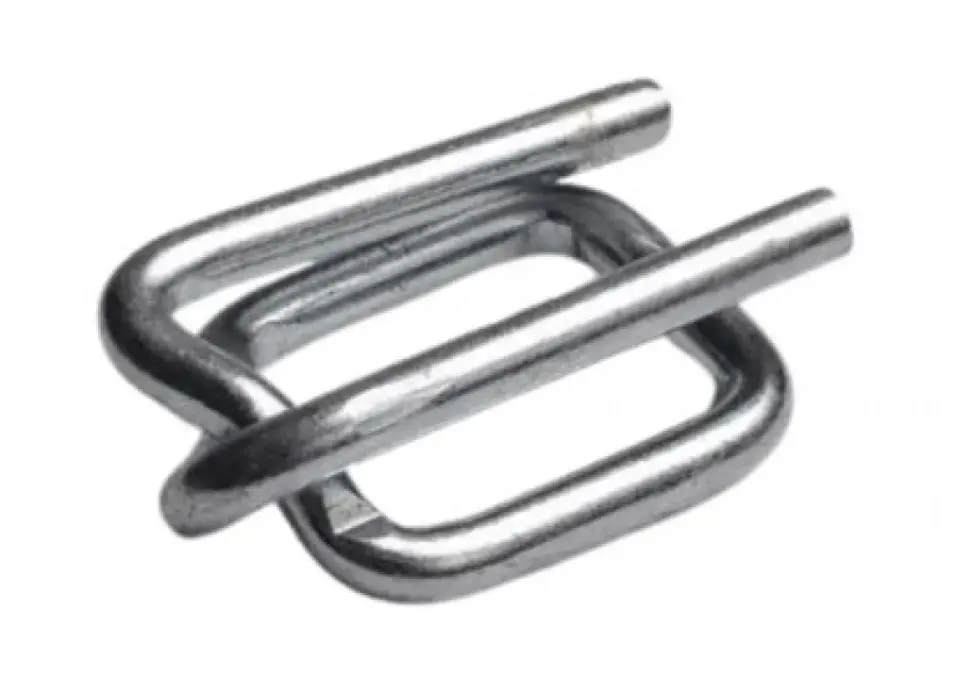
Wire buckles are primarily used with Composite or Woven Polyester Strapping. Unlike plastic poly-strapping that uses friction seals or heat, these buckles rely on tension and a “self-locking” mechanism to hold thousands of pounds of pressure.
Key Features
- Material: Usually made of high-carbon steel.
- Finish: Galvanized (silver/shiny) for rust resistance or phosphate (dull/dark) for extra grip on the strapping.
- Strength: Designed to maintain tension even under the shock-loading and shifting that happens during transit.
How it Works
- The strapping is folded into a loop and fed through the center of the buckle.
- The loop is hooked over the “arms” of the buckle.
- As a tensioning tool pulls the strap tight, the buckle’s geometry pinches the strap against itself. The tighter you pull, the more it locks.
Web Writeup: The Industrial Standard for Secure Loads
When it comes to securing heavy machinery, palletized goods, or timber, Wire Strapping Buckles are the industry standard for a reason. Engineered for maximum joint efficiency, these buckles ensure your cargo stays exactly where you put it.
Why choose Wire Buckles?
Weather Resistant: Our galvanized finish prevents corrosion, making them ideal for outdoor storage or long-term shipping in humid containers.
No Tools Required: While a tensioner is recommended for heavy loads, these can technically be threaded and tightened by hand for lighter applications.
Re-tensionable: Unlike metal crimp seals, if a load settles during transport, you can simply apply more tension to the same buckle without starting over.